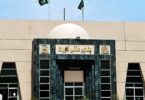
ISLAMABAD (APP): The Supreme Court (SC) on Wednesday adjourned hearing in a presidential reference seeking opinion on open balloting for the upcoming Senate elections till Thursday.
A five-member larger bench comprising Chief Justice of Pakistan (CJP) Gulzar Ahmed, Justice Mushir Alam, Justice Umar Ata Bandial, Justice Ijazul Ahsan and Justice Yahya Afridi heard the reference.
Attorney General for Pakistan (AGP) Khalid Jawed Khan, while continuing his arguments, said the Constitution did not mention the procedure for the election of NA speaker and deputy speaker and Senate chairman and deputy chairman.
The house officials conducted the elections where the Constitution did not specify the procedure, he said. The outgoing speaker served as returning officer for the election of the next one, he added.
He said the elections whose procedure was stipulated in the Constitution, would be considered under the Constitution.
The Constitution called for the creation of national and provincial assemblies, he added.
Justice Ijaz observed that the court understood the crux of his argument that the Constitution called to form offices and bodies, but the method of their election was in the law not in the Constitution.
The AGP said the offices of national and provincial assemblies were not constituted under the Constitution but under the law. The Constitution provided their composition, but laws and acts had been made for their elections, he added.
He said the duration of the parliament, the modus operandi, the number of sittings, etcetera were stated but the Constitution did not specify the procedure for the elections.
He said only the number of elected representatives was mentioned in the Constitution, but laws and acts were made for their election by the constituents.
The AGP said the number of special seats for women and minority and full composition of the parliament were provided in the Constitution.
Justice Ijaz asked how the elections were held for the women reserved seats.
The AGP replied that women seats were allocated by the winning ratio of the political parties. It was written in the Constitution that the National Assembly (NA) elections were held under the law, he added.
Addressing the AGP, the CJP said according to him (AGP) the NA elections were held by law.
Justice Ijaz Ul Ahsan said the Act 2017 called for elections by secret ballot.
The AGP said Article 59 provided the composition of the Senate. The word act was also used for women in the Senate, he added.
He said direct votes and constituencies had been mentioned for the NA but direct elections were not mentioned for the Senate.
Justice Bandial said the formal procedure for the election of NA members was given in the law but not for the Senate.
The AGP said the procedure for Senate elections was different as members of provincial assemblies proposed the candidates for the Senate. Independent candidates could also participate in the Senate elections, he added.
Justice Ijaz said the members of the provincial assemblies should be allowed to exercise their votes freely.
The attorney general said elections of Senate chairman, deputy chairman, prime minister and the chief ministers were not clear in the Election Commission and the Election Act. Article 60 of the Constitution mentioned the election of the Senate chairman, he added.
Justice Ijaz said Articles 53 and 60 of the Constitution did not mention that there would be open ballot elections or secret elections.
The attorney general said the elections of the NA speaker and Senate chairman would be held through secret balloting under the Article 266.
He said it was clear in the Constitution that the outgoing NA speaker would conduct the election of the speaker. The first task of the elected assembly would be the election of the speaker, he added.
He said the elections of the prime minister, NA speaker and Senate chairman were not conducted under the Election Act.
He said the parliament itself conducted the elections of the prime minister, Senate chairman and National Assembly speaker.
He said Article 53 of the Constitution mentioned the election of the speaker but Senate and NA elections were not held under the Constitution.
Justice Ijaz said Article 226 made it clear that all elections, except for the prime minister and the chief ministers, would be held by the secret ballot.
The AGP said the chapter on elections held under the law was different.
The Article 226 did not apply to every election, he added.
The chief justice said if Article 226 applied, the elections for reserved seats could not take place.
He said elections for the national and provincial assemblies were held under the law.
The attorney general said all laws were framed in accordance with the Constitution.
He said political parties submit lists for representation on reserved seats.
He said an independent candidate could contest the Senate election if he was nominated and proposed by a member of the provincial assembly.
Justice Ijaz said if any member of the provincial assembly wanted to vote against the party, he should use open balloting.
The attorney general said generally people considered election only on voting day but the election machinery was also part of the voting process. Elections were not just about voting as it had many stages, he added.
He said constituency elections, preparation of voter lists, delimitation, nomination papers, voting schedule, voting and results were all the stages.
The chief justice said those were the stages of direct elections.
The attorney general said whether there was an assembly or not, the president could issue an ordinance related to the elections.
He said the Senate Election Act of 1975 also laid down the procedure for holding Senate elections.
He said elections under the law could not be challenged but only elections held under the statute could be challenged in tribunals.
Justice Ijaz said elections under the law could be challenged under the Constitution.
The attorney general said the vote of an ordinary citizen was free but the vote of a member of provincial assembly (MPA) given to a senator was not free.
When the MPA’s vote for the Senate could not be free, then the ballot could not be secret, he added.
Justice Ijaz ul Ahsan said it was unwise to vote for another senator by secret ballot in violation of party discipline.
The MPA violating party discipline should have moral courage to openly say that he had voted against the party discipline, he added.
Upon this, Justice Bandial said this was moral, not legal. The MPA had the right to vote according to his will, he added.
The chief justice said the courts were the guardians of the Constitution.
Justice Yahya Afridi addressing the AGP said his argument was moral in nature and the matter was political.
He said the question raised in the presidential reference was legal and ethical but the matter was political.
He asked the attorney general that his case was based on ethics while the issue was political.
He asked why the government was seeking the opinion of the court instead of approaching the parliament?
The attorney general said the government had only approached the SC for an opinion.
If the opinion of the SC was in government’s favour, the final decision was to be taken by the parliament, he added.
He said the SC had given its opinion on the NA’s resolution regarding recognizing Bangladesh.
Justice Afridi said the AGP’s argument regarding Bangladesh was correct.
The attorney general said he could give eleven examples of cases in which the court ruled despite the presence of political aspects.
He said the apex court disqualified politicians by interpreting the law in dual citizenship cases.
He said the issue of disclosure of assets of parliamentarians was political but the SC also interpreted the law on it.
The government had come to the SC to stop the sale and purchase of votes and for transparency, he added.
Justice Ijaz asked the AGP whether he was just asking the court to interpret the Article 226 only?
The attorney general responded that he could not put it more simply.